Why Proper Tool Box Towing Matters: Protecting Your Tools and Your Truck
August 21, 2026
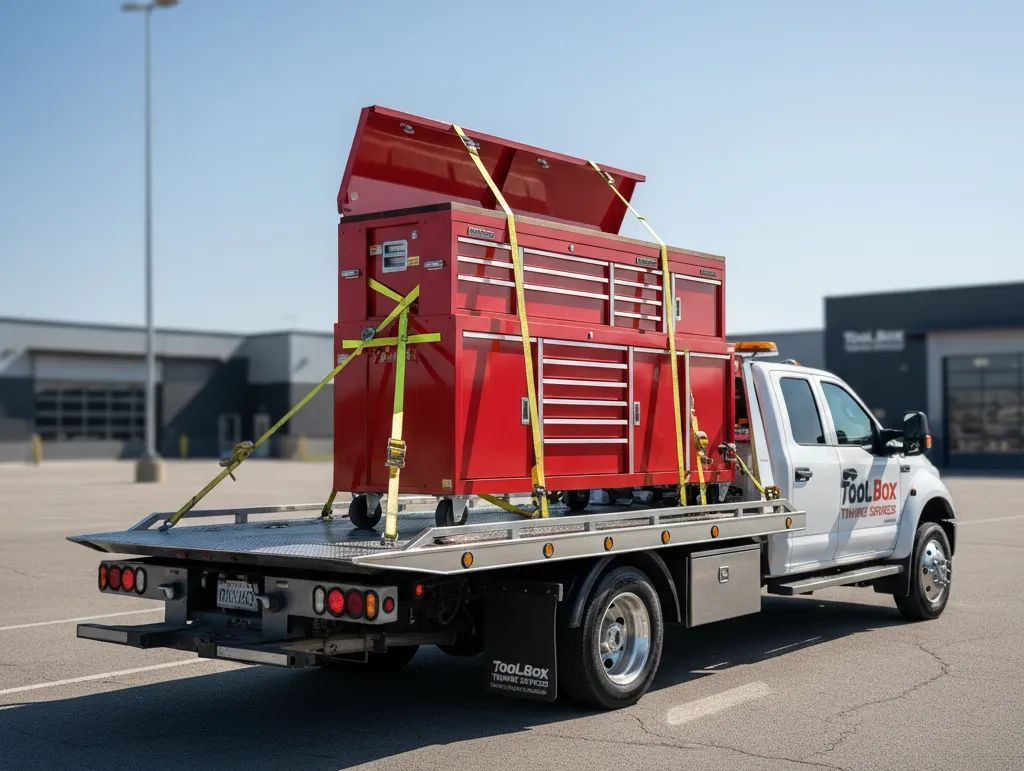
Quick Answer: A work truck loaded with mounted tool boxes needs flatbed-style tool box towing, not a standard hook-and-chain job, because dragging a loaded truck on its wheels shakes gear loose and puts weight in places the suspension was never built for. Flatbed towing lifts the whole vehicle off the road so nothing bounces, drags, or shifts during the ride. Before the truck ever gets hooked up, latches should be locked, loose tools boxed or bagged, and heavy equipment strapped down so nothing slides during loading. Weight matters too: a truck loaded unevenly, front-heavy or back-heavy, tows differently than an empty one and needs a driver who accounts for that. The goal is simple: get the truck and everything riding in it to the shop in the same condition it left the job site.
Your car just stalled on a dark stretch of Route 13, and you have no idea who to call. Every towing company you find online looks the same; their reviews are mixed, and you are not sure who actually shows up fast, handles your vehicle with care, and charges a fair rate. That one decision, made in under two minutes from the side of the road, can cost you hundreds of dollars or protect your car from damage that a bad tow can quietly cause.
After handling thousands of roadside calls across the Delmarva Peninsula, we can tell you that most drivers have never thought about what separates a
professional towing operation from one that cuts corners until they are already in a bad situation. The seven factors below will help you make that call confidently, whether you are planning ahead or already stranded.
Why Loaded Work Trucks Need Specialized Towing
You’re standing on the shoulder of Route 13 outside Salisbury, watching your work truck sit dead in the breakdown lane with two mounted tool boxes, a generator, and a week’s worth of job-site gear riding in the bed. The engine won’t turn over, and now you’re doing math you didn’t expect to do today: what happens to everything back there once the tow truck shows up? A truck like that isn’t just a vehicle. It’s rolling inventory, and a rough tow can cost you more in scattered tools and a dented bed than the actual repair.
This is where a lot of drivers get surprised. A standard tow, built around empty passenger cars, treats your truck like dead weight to be dragged to the nearest lift. A loaded work truck needs something different. Here’s what actually happens to a tool box and its contents during a tow, and what proper handling looks like when the load matters as much as the vehicle underneath it.
Your car just stalled on a dark stretch of Route 13, and you have no idea who to call. Every towing company you find online looks the same; their reviews are mixed, and you are not sure who actually shows up fast, handles your vehicle with care, and charges a fair rate. That one decision, made in under two minutes from the side of the road, can cost you hundreds of dollars or protect your car from damage that a bad tow can quietly cause.
After handling thousands of roadside calls across the Delmarva Peninsula, we can tell you that most drivers have never thought about what separates a
professional towing operation from one that cuts corners until they are already in a bad situation. The seven factors below will help you make that call confidently, whether you are planning ahead or already stranded.
What Happens to a Loaded Truck During a Standard Tow
Hook a loaded work truck up the wrong way and you’re asking for trouble before it ever leaves the shoulder. Wheel-lift towing pulls the front or rear axle off the ground while the other end stays on the road, and every bump, seam, and pothole between there and the shop gets transferred straight into the bed.
Vibration Is The Real Enemy
Tool boxes are bolted to a bed that’s now bouncing over rough pavement at towing speed, and that constant shaking works bolts loose, rattles latches, and jars anything not strapped down. A generator that felt solid in the driveway can walk itself right off its blocks over twenty miles of chip-sealed Eastern Shore road.
Weight Shifts Change How The Truck Handles
A bed loaded with steel toolboxes and equipment puts more weight over the rear axle than the truck was built to carry empty, and that shifts the balance point the tow operator has to account for. Get it wrong and the truck can sway or drag on one side during the pull, adding stress to a vehicle that’s already stopped working.
Unsecured Latches Fail Quietly
A tool box that looks closed isn’t the same as one that’s actually locked. Vibration works on weak latches the same way it works on loose bolts, and a box that pops open at 45 miles per hour on the shoulder of a bridge approach is a hazard for the truck behind you as much as for your tools.
Your car just stalled on a dark stretch of Route 13, and you have no idea who to call. Every towing company you find online looks the same; their reviews are mixed, and you are not sure who actually shows up fast, handles your vehicle with care, and charges a fair rate. That one decision, made in under two minutes from the side of the road, can cost you hundreds of dollars or protect your car from damage that a bad tow can quietly cause.
After handling thousands of roadside calls across the Delmarva Peninsula, we can tell you that most drivers have never thought about what separates a
professional towing operation from one that cuts corners until they are already in a bad situation. The seven factors below will help you make that call confidently, whether you are planning ahead or already stranded.
Why Flatbed Towing Is Built for This
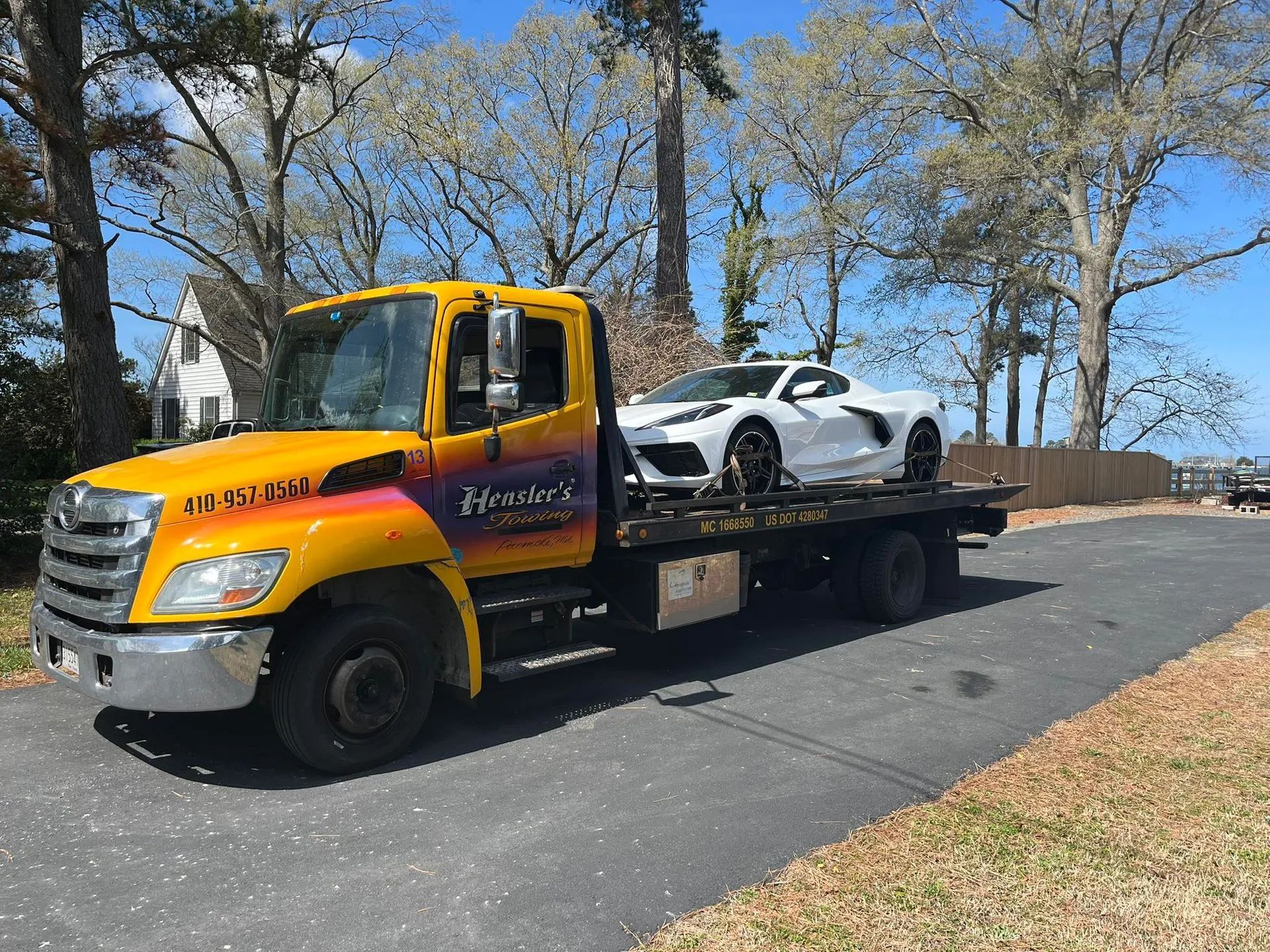
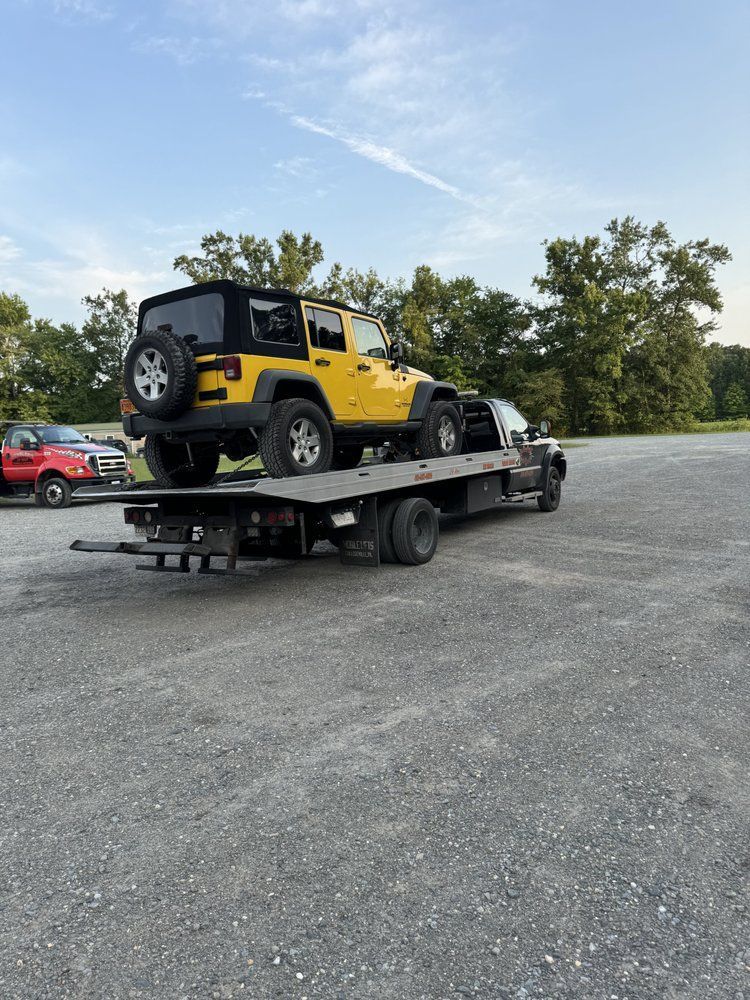
A flatbed changes the whole equation. Instead of dragging the truck on two wheels, the entire vehicle gets winched onto a level bed and rides fully off the ground for the whole trip. Nothing drags, nothing bounces against pavement, and the suspension isn’t fighting the tow the entire way.
That matters most for a truck carrying mounted equipment. Tool boxes, ladder racks, and job-site gear stay in roughly the same position they were in when the truck was parked and running, because the truck itself isn’t being pulled at an angle or bounced over expansion joints. Specialty and low-clearance towing setups, the kind built for sports cars and vans that can’t tolerate rough handling, work the same way for a loaded work truck. The goal is to move the vehicle without changing what’s happening on top of it.
Loading Is Where The Care Actually Shows. Winching a truck onto a flatbed at a slow, controlled speed keeps loose items from sliding forward or backward the way a sudden hookup would. A rushed load, on the other hand, can send a toolbox lid swinging or knock loose gear into the tailgate before the truck has even left the ground.
Your car just stalled on a dark stretch of Route 13, and you have no idea who to call. Every towing company you find online looks the same; their reviews are mixed, and you are not sure who actually shows up fast, handles your vehicle with care, and charges a fair rate. That one decision, made in under two minutes from the side of the road, can cost you hundreds of dollars or protect your car from damage that a bad tow can quietly cause.
After handling thousands of roadside calls across the Delmarva Peninsula, we can tell you that most drivers have never thought about what separates a
professional towing operation from one that cuts corners until they are already in a bad situation. The seven factors below will help you make that call confidently, whether you are planning ahead or already stranded.
Tie-Downs and Load Securement, Not Just for the Vehicle
Most drivers think about how the truck gets strapped to the flatbed. Fewer think about what’s strapped down inside the truck itself, and that’s usually where the damage happens.
Straps need to match the load, not just the vehicle
A truck itself gets secured with tie-downs rated for its weight, checked at each wheel point so it can’t shift during transport. The same logic applies to what’s riding in the bed: loose equipment, coolers, spare parts, and anything not bolted down should get its own tie-down or at least get boxed and latched before the truck ever leaves the ground.
A quick check before loading beats a bad surprise after
Good practice on any flatbed job is a walk-around before the truck moves, confirming nothing is going to shift, and a second check once it’s loaded to make sure the straps haven’t loosened. That same five minutes on a work truck means checking tool box lids, tailgate latches, and anything sitting loose in the bed.
Edge protection keeps straps from cutting into gear
A tie-down pulled tight against the sharp corner of a metal tool box can wear through the strap or dent the box itself. Padding or routing the strap around a smoother edge protects both the strap and what’s underneath it.
Tip: Before the tow truck arrives, do a sixty-second walk around your own bed. Latch every tool box, close every lid, and toss loose items like extension cords or hand tools into a box rather than leaving them rattling around free. It takes almost no time and it’s the single biggest thing you control before the load leaves your hands.
Your car just stalled on a dark stretch of Route 13, and you have no idea who to call. Every towing company you find online looks the same; their reviews are mixed, and you are not sure who actually shows up fast, handles your vehicle with care, and charges a fair rate. That one decision, made in under two minutes from the side of the road, can cost you hundreds of dollars or protect your car from damage that a bad tow can quietly cause.
After handling thousands of roadside calls across the Delmarva Peninsula, we can tell you that most drivers have never thought about what separates a
professional towing operation from one that cuts corners until they are already in a bad situation. The seven factors below will help you make that call confidently, whether you are planning ahead or already stranded.
Weight Distribution Changes How a Loaded Truck Tows
An empty truck and a loaded one aren’t the same vehicle once they’re hooked up, even though they look identical from the road.
Uneven weight throws off the balance point
Mounted tool boxes usually sit behind the cab, over or just ahead of the rear axle, and a full generator or a rack of ladders adds even more weight back there. That shifts the truck’s center of gravity rearward, which changes how it settles onto a flatbed and how much care the winch operator needs during the pull.
A front-heavy or back-heavy load needs a different approach
Just like a trailer with too much weight behind the axle can start to sway, a work truck loaded unevenly can settle strangely on a flatbed if the operator doesn’t account for where the weight actually sits. Experienced operators check the load before winching, not after, because adjusting position mid-pull is a lot harder than getting it right the first time.
More weight means more attention to securement
A truck loaded down with steel boxes and equipment weighs meaningfully more than the same truck empty, and that added weight needs tie-downs and winch equipment rated to handle it. This is exactly why tool box towing exists as its own category of service rather than a generic tow job with extra straps.
Your car just stalled on a dark stretch of Route 13, and you have no idea who to call. Every towing company you find online looks the same; their reviews are mixed, and you are not sure who actually shows up fast, handles your vehicle with care, and charges a fair rate. That one decision, made in under two minutes from the side of the road, can cost you hundreds of dollars or protect your car from damage that a bad tow can quietly cause.
After handling thousands of roadside calls across the Delmarva Peninsula, we can tell you that most drivers have never thought about what separates a
professional towing operation from one that cuts corners until they are already in a bad situation. The seven factors below will help you make that call confidently, whether you are planning ahead or already stranded.
What Goes Wrong When It’s Done Wrong
Skip the extra care and the damage shows up fast, sometimes before the truck even reaches the shop.
Tools Go Missing
A latch that wasn’t fully secured can pop open on a rough stretch of road, and by the time anyone notices, a wrench or a drill has already bounced out somewhere back on the highway. It’s one of the most common and most avoidable losses on a badly handled tow.
Mounting Hardware Works Loose
Bolts holding a tool box to the bed rail aren’t designed for the kind of repeated jolting a dragged tow puts them through. Over one bad tow, they can loosen enough that the box itself starts to shift, and that’s a problem that follows the truck long after it’s repaired and back on the road.
Bed And Paint Damage Adds Up
A tool box that shifts even an inch can scrape paint, dent a wheel well, or crack a taillight housing on the way. None of that shows up on the original repair estimate, and none of it needed to happen.
Warning: If your truck arrives at the shop and a tool box lid is open, a strap is missing, or gear that was in the bed isn’t there anymore, don’t wait to report it. Note what’s missing right away and let the shop and the tow operator know before the truck gets moved again or the load gets disturbed further. The sooner it’s flagged, the easier it is to figure out where something went wrong.
Your car just stalled on a dark stretch of Route 13, and you have no idea who to call. Every towing company you find online looks the same; their reviews are mixed, and you are not sure who actually shows up fast, handles your vehicle with care, and charges a fair rate. That one decision, made in under two minutes from the side of the road, can cost you hundreds of dollars or protect your car from damage that a bad tow can quietly cause.
After handling thousands of roadside calls across the Delmarva Peninsula, we can tell you that most drivers have never thought about what separates a
professional towing operation from one that cuts corners until they are already in a bad situation. The seven factors below will help you make that call confidently, whether you are planning ahead or already stranded.
Frequently Asked Questions
Should I remove my tool boxes before a tow?
Not for a properly handled flatbed tow. A tool box that’s securely bolted and latched can ride safely on a flatbed without being removed. What matters more is making sure it’s locked, the lid is fully closed, and anything loose inside isn’t going to shift once the truck is moving.
Does a heavier work truck cost more to tow?
That’s a question for the shop handling your service, but from a handling standpoint, a loaded truck does need equipment and attention scaled to its actual weight rather than treating it like an empty pickup. That’s part of why specialty towing for loaded trucks looks different from a standard call.
Can wheel-lift towing damage a truck bed full of tools?
It can, especially over rough roads. Wheel-lift towing keeps part of the vehicle on the ground, so every bump and pothole between the breakdown spot and the shop transfers into the bed and whatever is mounted or loaded there. A flatbed avoids that by lifting the whole truck off the road for the trip.
What should I do with loose tools before the tow truck gets there?
Box them, bag them, or strap them down. Anything not bolted to the truck should be contained before loading starts, because a rushed hookup on a busy roadside is not the time to be chasing a rolling toolbox across the bed.
Is tool box towing different from regular towing for trucks?
Yes. It’s built around trucks and specialty vehicles that need to be moved without disturbing what’s on or mounted to them, using flatbed equipment and load securement practices suited to the weight and setup of a work truck rather than a generic hookup.
How do I know if my tool box mounting is secure enough to travel?
Grab each corner of the box and try to shift it by hand. If it moves, rocks, or you can hear hardware shifting inside the mount, it needs attention before the truck goes anywhere on a hook. A box that doesn’t budge under hand pressure is a good sign it will hold up during transport.
Your car just stalled on a dark stretch of Route 13, and you have no idea who to call. Every towing company you find online looks the same; their reviews are mixed, and you are not sure who actually shows up fast, handles your vehicle with care, and charges a fair rate. That one decision, made in under two minutes from the side of the road, can cost you hundreds of dollars or protect your car from damage that a bad tow can quietly cause.
After handling thousands of roadside calls across the Delmarva Peninsula, we can tell you that most drivers have never thought about what separates a
professional towing operation from one that cuts corners until they are already in a bad situation. The seven factors below will help you make that call confidently, whether you are planning ahead or already stranded.
Protecting Your Work Truck During Every Tow
A loaded work truck deserves the same attention as the tools and equipment it carries. Proper flatbed towing, balanced loading, secure tie-downs, and firmly latched tool boxes help prevent unnecessary shifting, vibration, and damage during transport. With Over 30 Years of Combined Experience, Automotive Services of Delmarva understands the handling considerations that come with moving work trucks throughout Pocomoke City, MD, especially when valuable equipment remains mounted or stored in the bed.
Taking a few minutes to secure loose tools and check mounted equipment can make a meaningful difference before transport begins. When the truck is positioned carefully and its load is properly contained, both the vehicle and its contents are better protected throughout the trip. Proper
tool box towing
is ultimately about preserving the condition of the entire work rig, allowing the truck, mounted storage, and job-site equipment to arrive together without turning one mechanical problem into additional damage or loss.