When to Call for a Tow vs. When Roadside Assistance Is Enough
July 15, 2026
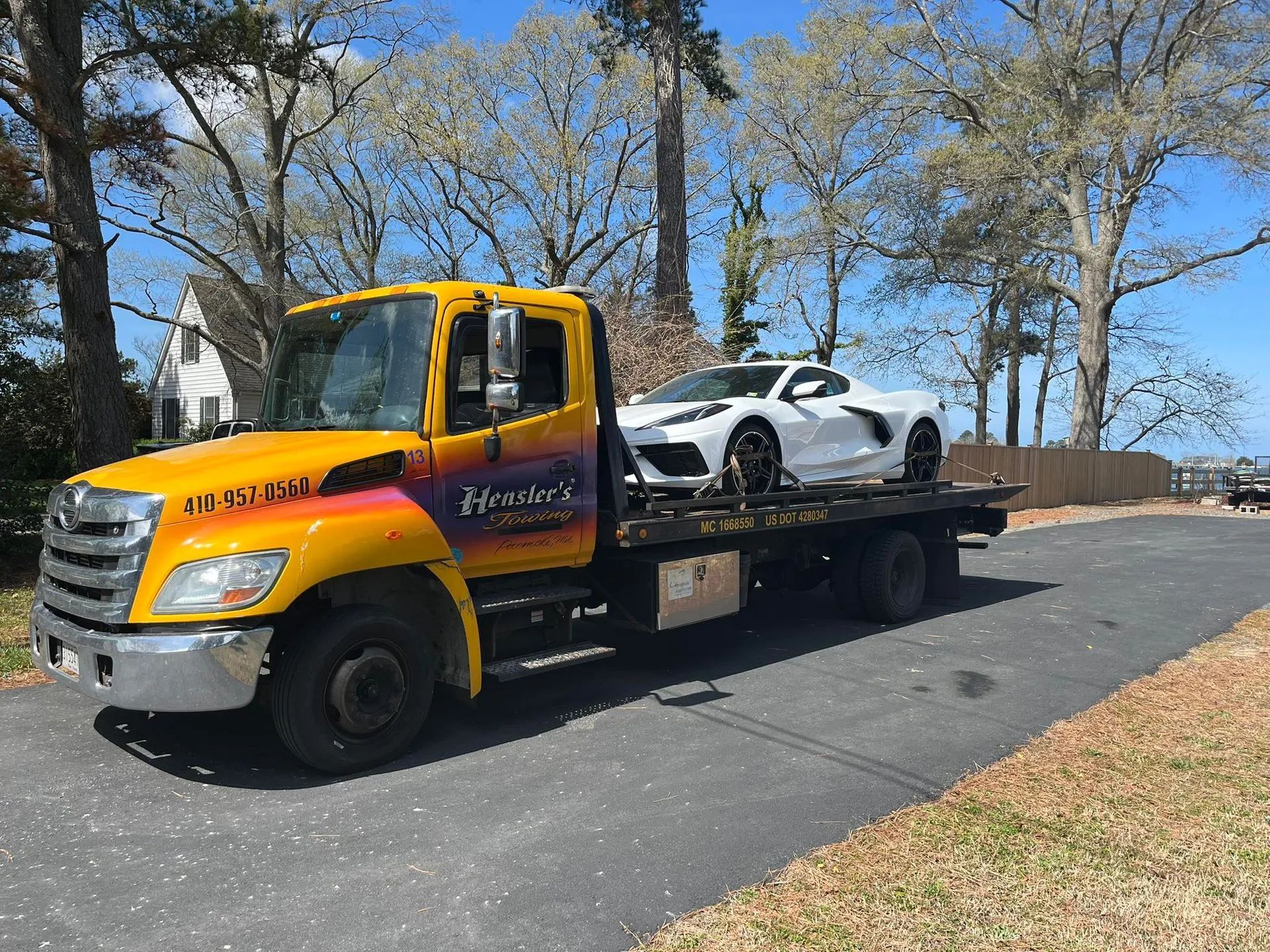
Quick Answer: The simplest way to decide is to ask whether the problem can be safely fixed where you sit. If it can, roadside assistance is usually enough: a dead battery needs a jump, a flat with a good spare needs a tire change, a lockout needs the door opened, an empty tank needs fuel, and a vehicle stuck on a soft shoulder needs a winch-out. If the car cannot be made safe to drive on the spot, you need a tow: it will not start after a jump, the engine is overheating, the transmission will not shift, there is crash damage, or a tire and rim are destroyed with no usable spare. When you are unsure, the safe move is to stop driving and let it ride on the truck.
You are pulled onto the shoulder of Route 13 with your hazards on, or parked at an odd angle in a beach-town lot after a long day, and the question hits you: is this a quick fix, or does my car need to go on a truck? It is one of the most common things drivers wrestle with on the side of the road, and getting it right saves you time, money, and sometimes a much bigger repair. Call for the wrong help and you either wait on a tow you did not need or try to limp a car somewhere it never should have driven.
Here is how we think about it after decades of answering these calls across the Eastern Shore. Most roadside situations fall cleanly into one of two buckets: problems that can be solved right where you are stopped, and problems where the only safe next step is a ride to a shop. Once you know which signs point to which, the decision gets a lot easier, even at night on a rural backroad in Worcester County. Here is how to tell them apart.
Your car just stalled on a dark stretch of Route 13, and you have no idea who to call. Every towing company you find online looks the same; their reviews are mixed, and you are not sure who actually shows up fast, handles your vehicle with care, and charges a fair rate. That one decision, made in under two minutes from the side of the road, can cost you hundreds of dollars or protect your car from damage that a bad tow can quietly cause.
After handling thousands of roadside calls across the Delmarva Peninsula, we can tell you that most drivers have never thought about what separates a
professional towing operation from one that cuts corners until they are already in a bad situation. The seven factors below will help you make that call confidently, whether you are planning ahead or already stranded.
The Simple Rule: Can It Be Fixed Where You Sit?
Before running through specific problems, hold onto one question, because it answers most situations on its own. Can the vehicle be made safe to drive again right here, in a few minutes, with the right tools?
If the answer is yes, that is roadside assistance. Roadside work is about restoring your mobility on the spot, getting the engine turning, the tire holding air, the door open, or fuel in the tank so you can drive away safely. If the answer is no, that is a tow. A tow is what you need when the car cannot safely move under its own power and has to be carried to a repair shop. Almost everything below is just a way of answering that one question for the situation in front of you.
Your car just stalled on a dark stretch of Route 13, and you have no idea who to call. Every towing company you find online looks the same; their reviews are mixed, and you are not sure who actually shows up fast, handles your vehicle with care, and charges a fair rate. That one decision, made in under two minutes from the side of the road, can cost you hundreds of dollars or protect your car from damage that a bad tow can quietly cause.
After handling thousands of roadside calls across the Delmarva Peninsula, we can tell you that most drivers have never thought about what separates a
professional towing operation from one that cuts corners until they are already in a bad situation. The seven factors below will help you make that call confidently, whether you are planning ahead or already stranded.
When Roadside Assistance Is Usually Enough
A lot of breakdowns look scary in the moment but are truly quick fixes when the right person shows up with the right equipment. These are the ones that usually end with you driving away.
A dead or weak battery
A slow-cranking engine, clicking sound, or dead battery is often solved with a professional jump-start. If the vehicle starts and continues running normally, roadside assistance is usually all that is needed.
A flat tire with a good spare or a repairable puncture
Most flat tires can be resolved roadside by installing a usable spare or repairing a minor tread puncture. These services quickly restore safe driving without requiring the vehicle to be towed.
A lockout
Locking your keys inside the vehicle is a common roadside service. Technicians use specialized tools to unlock the vehicle safely without damaging the doors, locks, or windows, allowing you to continue your trip.
An empty tank
Running out of fuel is a straightforward roadside assistance call. A technician delivers enough fuel to get your vehicle running again so you can safely reach the nearest service station.
Stuck on a soft shoulder or in the mud
Vehicles stuck in mud, sand, shallow ditches, or soft shoulders can often be recovered with professional winching. If no damage occurred, the vehicle is usually ready to continue driving immediately afterward.
Your car just stalled on a dark stretch of Route 13, and you have no idea who to call. Every towing company you find online looks the same; their reviews are mixed, and you are not sure who actually shows up fast, handles your vehicle with care, and charges a fair rate. That one decision, made in under two minutes from the side of the road, can cost you hundreds of dollars or protect your car from damage that a bad tow can quietly cause.
After handling thousands of roadside calls across the Delmarva Peninsula, we can tell you that most drivers have never thought about what separates a
professional towing operation from one that cuts corners until they are already in a bad situation. The seven factors below will help you make that call confidently, whether you are planning ahead or already stranded.
When You Need a Tow
The other bucket is the situations where no amount of on-the-spot work makes the car safe to drive. Trying to force it here is where people turn a repair into a much bigger one.
It will not start, even after a jump
If a jump-start fails or the engine immediately stalls again, the problem likely involves the starter, alternator, fuel system, or another major component. Towing is the safest way to reach a repair shop.
The engine is overheating
An overheating engine should never be driven. Pull over safely, switch the engine off, and arrange towing. Continuing to drive can cause severe engine damage and significantly increase repair costs.
The transmission will not shift or slips
Difficulty shifting gears, slipping transmissions, or harsh gear changes indicate serious mechanical problems. Driving further may worsen the damage, making towing the safest and most cost-effective option.
There is crash or collision damage
Even minor collisions can damage steering, suspension, wheels, or fluid systems. Hidden mechanical issues may make the vehicle unsafe, so professional towing and inspection are recommended before driving again.
A flat with no spare, or a damaged tire and rim
If the tire is shredded, the wheel is damaged, or no usable spare is available, towing is the safest solution. Driving on a flat tire often causes expensive wheel and suspension damage.
Warning lights plus a car that feels wrong
Warning lights combined with shaking, pulling, grinding noises, or fluid leaks usually indicate serious mechanical problems. Avoid driving the vehicle and arrange towing to prevent additional damage or safety risks.
Tip: Before you decide anything, get yourself safe first. Pull as far off the travel lane as you can, turn on your hazard lights, and if it is safe, step away from the car and away from traffic rather than standing beside it on the shoulder. Maryland safety officials stress getting clear of live traffic lanes, since a breakdown becomes far more dangerous when you are standing next to fast-moving cars. Make the call from a safe spot, not from the driver’s seat in the lane.
Your car just stalled on a dark stretch of Route 13, and you have no idea who to call. Every towing company you find online looks the same; their reviews are mixed, and you are not sure who actually shows up fast, handles your vehicle with care, and charges a fair rate. That one decision, made in under two minutes from the side of the road, can cost you hundreds of dollars or protect your car from damage that a bad tow can quietly cause.
After handling thousands of roadside calls across the Delmarva Peninsula, we can tell you that most drivers have never thought about what separates a
professional towing operation from one that cuts corners until they are already in a bad situation. The seven factors below will help you make that call confidently, whether you are planning ahead or already stranded.
The Gray Areas, and How to Decide
Some situations do not announce themselves clearly, and those are the ones worth thinking through. The good news is that the same core question still applies.
A jump that will not hold
If your vehicle dies again soon after a jump-start or repeatedly needs boosting, the problem likely involves the charging system or battery. Professional diagnosis and towing are usually the safest next steps.
A flat you could technically drive on
Driving on a completely flat tire, even briefly, can destroy the tire and damage the wheel. If no usable spare is available, arranging towing is safer than risking more costly repairs.
It runs, but something is clearly off
A vehicle that overheats, leaks fluids, makes grinding noises, or displays serious warning lights should not be driven. Towing prevents additional mechanical damage and helps avoid expensive repairs caused by continued operation.
Your car just stalled on a dark stretch of Route 13, and you have no idea who to call. Every towing company you find online looks the same; their reviews are mixed, and you are not sure who actually shows up fast, handles your vehicle with care, and charges a fair rate. That one decision, made in under two minutes from the side of the road, can cost you hundreds of dollars or protect your car from damage that a bad tow can quietly cause.
After handling thousands of roadside calls across the Delmarva Peninsula, we can tell you that most drivers have never thought about what separates a
professional towing operation from one that cuts corners until they are already in a bad situation. The seven factors below will help you make that call confidently, whether you are planning ahead or already stranded.
Frequently Asked Questions
Is a flat tire a roadside fix or a tow?
Most flat tires can be handled roadside if a usable spare is available. Towing becomes necessary when the tire is severely damaged, no spare is available, or the wheel has also been damaged.
My car started after a jump. Do I still need a tow?
Not always. If the vehicle continues running normally after the jump, you may drive it. If it will not restart or stalls again shortly afterward, professional diagnosis or towing is recommended.
Can I drive a short distance if my engine is overheating?
No. Driving an overheating vehicle can cause severe engine damage. Pull over safely, switch off the engine, allow it to cool, and arrange towing instead of risking expensive mechanical repairs.
What if I'm not sure whether it's safe to drive?
If your vehicle shows warning lights, unusual noises, leaks, overheating, or poor handling, avoid driving it. Having the vehicle assessed or towed is safer than risking additional damage or an accident.
Does roadside assistance cover being stuck in mud or sand?
Yes. Winch-out recovery services can pull vehicles from mud, sand, soft shoulders, or shallow ditches. If no damage occurred while getting stuck, you can often continue driving afterward.
Should I call roadside or a tow after a minor accident?
Even after a minor collision, hidden damage may affect steering, suspension, wheels, or fluid systems. Having the vehicle professionally towed and inspected is often the safest option before driving again.
Your car just stalled on a dark stretch of Route 13, and you have no idea who to call. Every towing company you find online looks the same; their reviews are mixed, and you are not sure who actually shows up fast, handles your vehicle with care, and charges a fair rate. That one decision, made in under two minutes from the side of the road, can cost you hundreds of dollars or protect your car from damage that a bad tow can quietly cause.
After handling thousands of roadside calls across the Delmarva Peninsula, we can tell you that most drivers have never thought about what separates a
professional towing operation from one that cuts corners until they are already in a bad situation. The seven factors below will help you make that call confidently, whether you are planning ahead or already stranded.
Making the Right Call From the Shoulder
The line between a roadside fix and a tow really comes down to that one question: can the car be made safe to drive right where it sits? A jump, a spare, the door back open, a little fuel, or a winch out of the mud, and you are back on the road. An engine that overheats, a transmission that will not shift, a car that will not start or has taken real damage, and it needs to ride, not drive. When the two blur together, lean toward the tow, because protecting the vehicle beats saving a few minutes every time. Knowing the difference before you are stranded is what lets you make the calm, correct call when it actually happens.
Get the right help dispatched the first time — Whether you need a quick roadside service such as a jump-start, tire change, lockout assistance, or fuel delivery, or your vehicle requires
towing because it will not start, is overheating, or has been damaged, choosing a team that provides both services ensures you receive the right solution without guesswork. Backed by over 30 years of combined experience serving drivers throughout Pocomoke City, Maryland, Automotive Services of Delmarva operates 24/7 with fast response times, dispatching experienced operators who can repair the problem on-site whenever possible and safely tow your vehicle when necessary. Contact us as soon as you're stranded and let a local team that knows the roads get you moving again.